
The prototype trap: how designers are accidentally undermining themselves on AI
That’s right, friends — it’s time for another hot take. Grab a stick, spear a marshmallow to roast, and settle in for another designer sharing another rant.

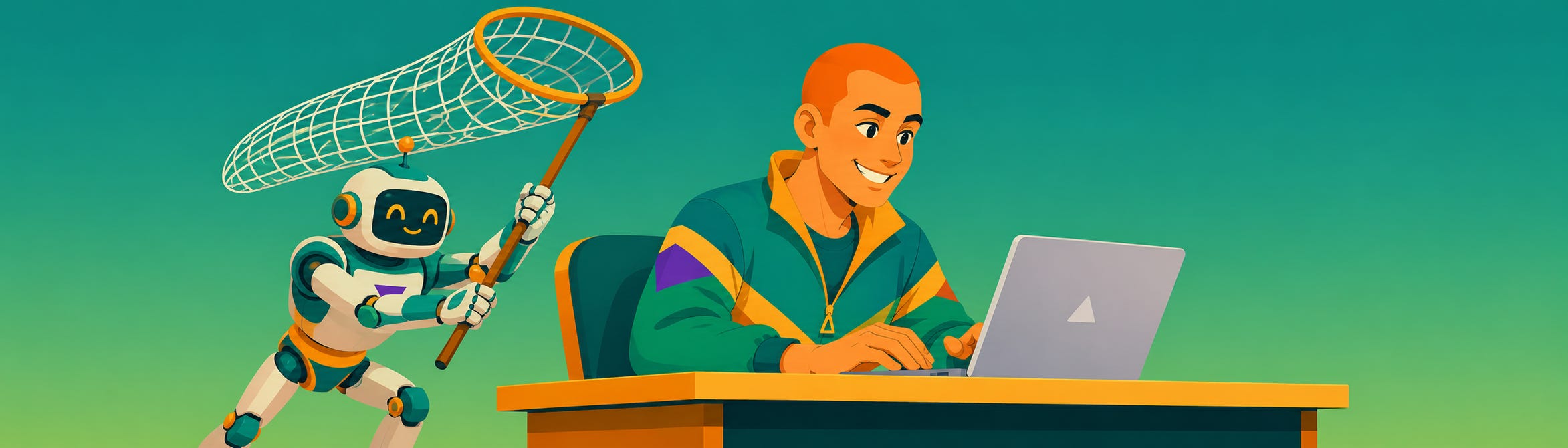
So, to state the obvious, there’s a lot of anxiety right now about what AI means for the craft, the role, and the value of design. I get it. I really do. Some of that worry is entirely justified, and it would be a bit odd not to feel twitchy about a technology turning up in every corner of product development at once.
Here’s my actual take, though: in response to that anxiety, a lot of designers are reaching for a framing of AI that is far too small. How? They’re turning to prototyping as a skill that AI can amplify and accelerate.
The thing is, once that’s the story, we start describing the value of design in much narrower terms than we’d ever mean to. We make it sound as though our contribution is mostly about producing visual artefacts faster — rather than shaping behaviour, understanding, trust, structure, and outcomes.
That, to me, is a massive self-own.
The irony is that this narrowing usually comes from a defensive instinct. It’s a way of keeping AI in a box that we, as designers, own and hold the key to. Keeping it at the edges of the work. Keeping it in the prototype phase, where it still feels like a tool rather than something that might reshape the discipline more fundamentally. I understand the instinct, but I think it’s doing the opposite of protecting design.
If we keep talking about AI as though its main relevance is speeding up mock-ups and generating visuals, we are quietly shrinking the role ourselves — and at a moment when other disciplines are visibly expanding their view of what AI can do, that feels like a genuinely risky move.
So that’s my take: in trying to make AI feel smaller, some designers are also making design feel smaller.

The prototype trap
To be clear, the problem isn’t that prototyping and image generation are bad use cases. They’re not. Some of this stuff is genuinely helpful — it speeds things up, opens up options, lowers the cost of exploring a direction, makes rough ideas a little less rough. Great.
As a content designer especially, I’m having to level up my own prototyping skills fairly quickly, precisely because AI tools have made that so much more accessible to me.
The problem is when that becomes the ceiling.
There’s a difference between “this is one practical use of AI in design” and “this is the main event.” Bluntly, a lot of the conversation is still stuck on the latter. AI as a quicker route to artefacts, a way to produce more UI, a better sketching assistant. Useful, but a very limited account of what’s actually happening.
That’s the prototype trap.
It keeps AI framed as a tool for making outputs, rather than a material that changes what products can be, how systems behave, and where design has influence. It keeps the conversation comfortably downstream, on the things designers already know how to point at, rather than the messier and far more interesting questions of behaviour, logic, knowledge, trust, and decision-making.
That comfort, I think, is part of the problem. While AI stays parked in the prototype phase, we get to treat it as adjacent to the real work, rather than something that might reshape the work itself. It stays a layer on top, instead of a capability inside the product. Something that helps us make the thing, rather than something that changes the thing.
That might feel safer. It’s also a very efficient way to miss the opportunity entirely.

Other disciplines are already moving up a level
What makes this more uncomfortable is that richer ways of working with AI are already emerging, and indeed, close to home too.
Take content design. (Yes, I’m biased. I know.) One of the most interesting shifts here is that the work no longer stops at the words a user reads. Increasingly, it includes designing the system that generates those words in the first place: the prompt logic, the knowledge source, the constraints, the fallback behaviour, the tone. All of that means defining the conditions under which the system answers, refuses, escalates, or asks for clarification.
That’s a major shift. The job moves from crafting individual outputs to shaping the thing that produces them, and the surface area for design influence gets bigger with it. You’re no longer improving one sentence; you’re designing the behaviour behind thousands of them, across a product, at varying levels of risk and complexity. The work becomes more systemic — and the impact scales with it.
Research has a similar pattern. The obvious use case is speed: summarise the notes, cluster the themes, save a few hours. Lovely. The bigger opportunity, though, isn’t faster synthesis — it’s designing better systems for working with evidence altogether. Systems that connect interviews, support tickets, behavioural data, search queries, and experiments, so teams can retrieve insight, test assumptions, and make decisions with more continuity and less guesswork.
Again, the role moves up a level. AI stops being a way to produce a research output faster, and becomes a way to reshape how insight lives and works inside an organisation.
That’s exactly the shift I think some product designers are at risk of missing.
While content designers and researchers are, in places, using AI to expand the scope of their work into systems, product designers often seem to be using it to do the same job slightly faster. Design the interface, but quicker. Explore the screen, but quicker. Generate the prototype, but quicker. And across all, create more variants too, also quicker. Doesn’t that strike you as a problem?
If content design is moving from designing words to designing the systems that generate words, then product design should be moving from designing interfaces to designing the systems that shape interface behaviour: the logic behind the experience, the confidence signals, the handoffs, the failure modes, the conditions under which a product acts, suggests, explains, or defers.
Instead, much of the discourse still makes it sound as though product designers are mostly using AI to produce interfaces a bit faster, which feels like a remarkably small ambition for a discipline that’s supposed to think in systems.
To put it bluntly: other disciplines are using AI to expand their remit. Product design risks using it to compress its own.

Product design is quietly shaping the wrong picture of design
This is the part that worries me most, and not because product designers need to lead the conversation on AI. They don’t. Some of the most genuinely systemic thinking is already happening in content design, in research, and elsewhere.
What worries me is that product design is still, rightly or wrongly, the most visible version of design in a lot of organisations. It tends to dominate the picture people have of what “design” is and where it adds value. So when product design discourse reduces AI to prototyping, mock-ups, and image generation, that framing rarely stays politely contained. It starts to shape how the role of design itself gets understood, and that has consequences for every one of us, whatever kind of designer we are.
Once the dominant story becomes “design + AI = faster interfaces,” everything more intricate gets harder to see. The systems work, the behavioural work, the knowledge work, the language work, the trust work, the research work, all of it flattened into a tidy little story about speed and output.
That’s the bit I find genuinely frustrating. It’s not just that product designers might be thinking too narrowly about their own role, it’s that this narrow framing risks oversimplifying design as a whole, at exactly the moment many of us are trying to show that design has a much deeper part to play in shaping intelligent systems.
If the loudest version of design keeps presenting AI as a way to generate screens faster, it becomes very easy for the rest of the organisation to assume that design, in general, is mostly about producing interfaces a bit more efficiently. Once that assumption settles in, it shrinks the room for every discipline trying to do something more systemic.
So this isn’t a complaint about who gets to lead. It’s a concern about who gets to define the story, and whether that story reflects the reality of design as a broad discipline. Right now, too much of it makes design sound smaller, flatter, and more output-obsessed than it actually is.
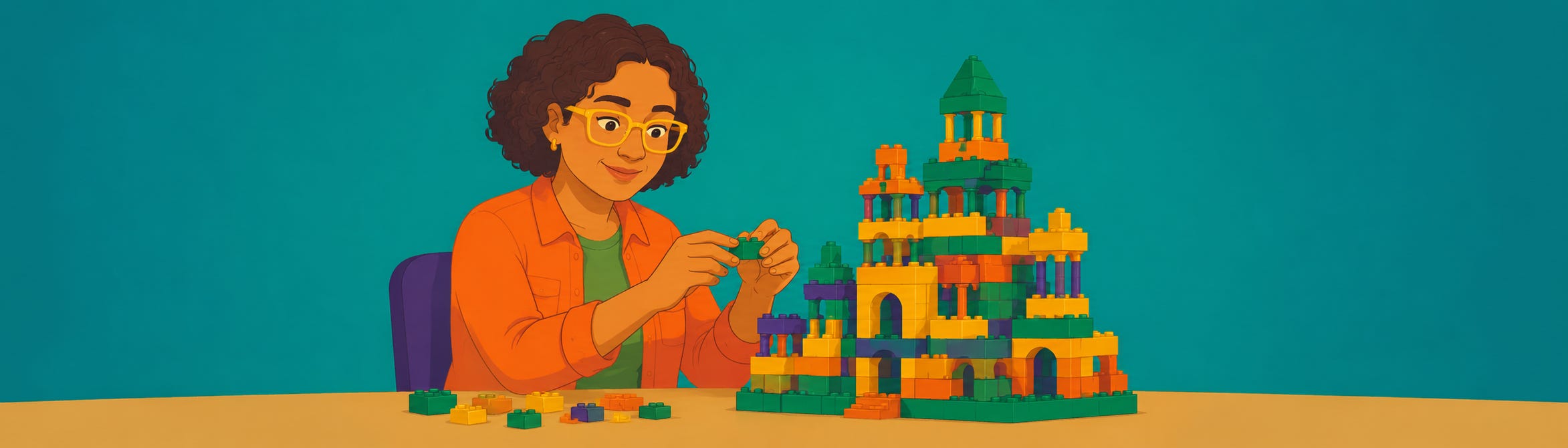
AI in design is much bigger than faster artefacts
I think part of why this conversation keeps collapsing back to prototypes and image generation is that the bigger opportunity is also the more uncomfortable one.
The moment you take AI seriously as part of the product, and not just part of the workflow, the job changes. You have to think in systems. You have to think about what the product knows, what it should do with that knowledge, when it should act, when it should stay quiet, how it should explain itself, and how a person makes sense of what’s happening when the output is no longer fully predetermined. That’s a different level of design challenge.
Some of the hesitation around AI, I suspect, comes from the fact that this asks more of us, not just in volume, but in range. It asks us to work across a broader surface area than we’re used to. To get more comfortable with logic, orchestration, structured knowledge, and the design of things that aren’t neatly contained in a static interface.
That can be unsettling. I feel it in content design too. Indeed, please don’t think that as a content designer proimarily, I’m pretending that we’re exempt from any of this. If anything, AI is stretching our discipline as well: we’re still designing words, but we’re increasingly being pulled toward prototyping, interaction thinking, and more visual ways of working, because those are now both more accessible and more relevant to the systems we’re helping shape. The role stretches in both directions at once. More system design on one side, more interface fluency on the other.
So no, this expansion doesn’t only apply to product designers. It’s happening across design, which is exactly why reducing AI to faster artefact production feels so inadequate. The more honest version is that AI is asking many of us to become broader, more adaptable designers, not by abandoning our specialisms, but by building more range around them.
It opens up far more interesting possibilities than “the tool made my mock-up quicker.”
It opens up accessibility systems that don’t just audit a flow once, but continuously assess readability, interaction patterns, and cognitive load as a product evolves. Research systems that connect signals across support, analytics, experiments, and qualitative evidence, so insight stays alive inside an organisation. Knowledge-driven experiences where the real design work is in shaping what the system can retrieve, how it responds, how it signals confidence, and what it does when it’s uncertain.
It opens up products that can guide, suggest, explain, draft, check, monitor, or act on someone’s behalf. Once you’re designing for those behaviours, the interface is only one part of the picture. You’re also designing the terms of the system itself — its boundaries, its judgement, its voice, its accountability.
That’s where the opportunity gets bigger. It’s also where the skills question gets sharper. This kind of work asks designers to build muscles that haven’t always been central: treating prompt design less as a writing trick and more as interaction logic; working more closely with engineers on how knowledge is structured and retrieved; content designers becoming more visually fluent, product designers becoming more fluent in language, logic, and system behaviour.
None of that is especially tidy, but then again, important shifts in design rarely are.
The more useful response to that discomfort isn’t to retreat into the part of the job that feels most familiar. It’s to accept that the discipline is stretching, and to be honest, that this will probably ask more of us than before: more systems thinking, more collaboration, more technical curiosity, more willingness to work outside the boundaries we inherited.
That’s not a threat to design. It’s a much bigger version of it.

While other roles expand, design risks shrinking itself
Here’s where the stakes get hard to ignore. While parts of design are still framing AI in terms of faster artefacts, the roles around us are being far less modest about it.
Engineers are learning how models behave, how to structure retrieval, how to evaluate outputs, how to orchestrate whole systems. Product managers are treating AI as capability and strategy, as something that changes what a service can do and how value gets created. Founders aren’t looking at AI and thinking “brilliant, we can make the prototype a bit quicker.” They’re imagining new products, new operating models, new service layers entirely.
So the risk isn’t simply that designers are underestimating AI. It’s that, in underestimating it publicly and repeatedly, design ends up presenting itself as narrower than the roles around it. And that has consequences.
In most organisations, scope doesn’t stay abstract for long. It turns into ownership and influence, into who gets pulled into the conversation early, and who gets asked to tidy things up later. If engineers and PMs show up with a broad, systems-level grasp of what AI can do, while design is still mostly associated with making interfaces faster, then design gets quietly positioned downstream. Not because it lacks value, but because it described its value too narrowly.
That’s the irony I keep coming back to. Designers often talk about AI as a threat to the profession, but one of the clearest threats here is the profession reducing itself in anticipation of that threat. Trying to keep AI safely contained to prototypes and image generation might feel like protecting the core of the work. In practice, it risks making that core look far smaller than it is.
Once that picture sets in, it affects all of us. It affects content designers making the case that language, prompt behaviour, and trust are design concerns. It affects researchers arguing that insight systems are strategic design work. It affects service designers, ops designers, and anyone working beyond the interface layer. A narrow story about product design becomes a narrow story about design, full stop.
The answer isn’t for designers to suddenly become engineers or PMs, or to collapse every discipline into one blurry “AI designer” role. That’s not the point. The point is that other roles are expanding their grasp of the terrain, and design can’t afford to respond by presenting itself as the function that makes the outputs nicer at the end. Because if that’s the role design appears to claim, that’s the role it will be handed.
The real professional risk was never that AI makes design irrelevant overnight. It’s that design slowly talks itself into a smaller, more vulnerable position while the rest of product development moves upstream into systems, behaviour, intelligence, and strategy.

Design’s role has always been bigger than output
The most useful response to all of this isn’t panic. It isn’t nostalgia either. It’s to get much clearer — and much more ambitious — about what design actually does.
Design has never really been just about producing artefacts. If you’ve read this far, I’m going to assume you agree with me on that.
At its best, design shapes how things work, how they feel, how they’re understood, and whether people can actually use them with any confidence. It gives form to behaviour and makes systems legible. It creates clarity where there would otherwise be confusion, and helps products guide, reassure, and recover. It connects intent to experience. All of that still matters — and in AI-shaped products, it matters more, not less.
Because once products start generating, recommending, adapting, retrieving, deciding, and acting, the design questions only get deeper. How does the system behave? What does it know? What should it say, and what should it never say? When should it act with confidence, and when should it hold back? How does a person understand what’s happening? How do we design for trust without faking certainty? How do we make room for error, correction, and human judgement?
That is design work. A great deal of it.
So I don’t think the challenge is to defend design by keeping AI small. It’s to reclaim a much fuller account of where design has always mattered, and where it now matters even more. That means letting the discipline stretch. It means accepting that the shape of the work might get broader: more systems thinking, more technical fluency, more comfort with ambiguity, more overlap with the disciplines next to us. That isn’t a dilution of design. It’s design meeting the reality of the products we’re now building.
So this is my actual challenge to you.
Please, be careful what story you tell about your own work.
If the loudest version of “AI in design” is that it helps make prototypes and images faster, don’t be surprised when people start to believe that was the whole job all along. If, on the other hand, we can talk about AI in a way that reflects the real depth of what design does — across systems, behaviour, language, trust, evidence, and decision-making — then this moment becomes something else entirely.
I don’t want us to be the architects of design’s shrinking. I’d much rather we model the argument for its expansion.
Subscribe for more practical advice and hot takes on content design, product, and AI, or feel free to say hello over on LinkedIn or Bluesky. 💚